

It is one of the oldest debates in the home: cold wash vs hot wash. For generations, the “hotter is better” rule reigned supreme, fuelled by the belief that high temperatures were the only way to truly sanitise fabric and shift stubborn grime. However, with the evolution of modern textiles and high-performance detergents, the landscape of laundry care has changed significantly.
In a busy Australian household, getting the wash temperature right isn’t just about cleanliness. It affects the lifespan of your wardrobe, your carbon footprint, and those ever-rising energy bills. Choosing between a cold wash vs hot wash can be the difference between a shirt that lasts five years and one that shrinks after five washes.
The Rise of the Cold Wash
Historically, hot water was necessary because older detergents didn’t dissolve well in low temperatures. Today, things are different. Most modern biological and non-biological detergents are enzyme-based, meaning they are specifically formulated to break down proteins, fats, and starches at temperatures as low as 15°C to 30°C.
Benefits of Cold Washing
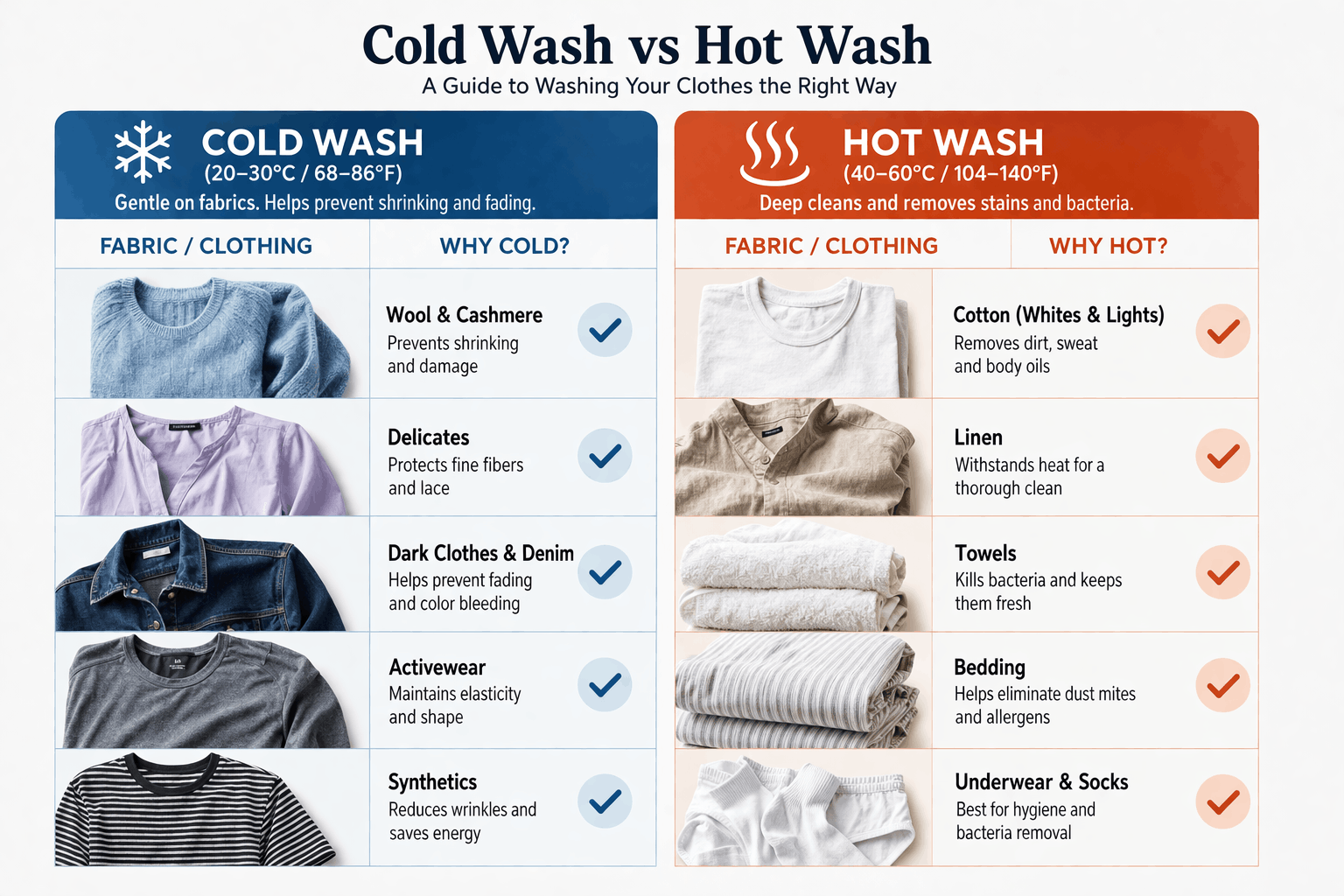
- Garment Longevity: Cold water is much gentler on fabric fibres. It prevents the breakdown of elasticity in items like leggings and swimwear and stops natural fibres like wool and silk from shrinking.
- Colour Preservation: Heat causes fabric dyes to bleed and fade. If you want your dark denim and bright summer dresses to stay vibrant, a cold cycle is the way to go.
- Energy Efficiency: Did you know that about 75% to 90% of the energy used by a washing machine goes solely into heating the water? Switching to cold can significantly lower your electricity usage.
- Reduced Wrinkling: Hot water can “set” wrinkles into certain fabrics. Cold water helps clothes retain their original shape, meaning less time spent at the ironing board.
When a Hot Wash is Necessary
While cold water is the smarter everyday choice for most loads, the hot wash still plays an essential role in a well-rounded laundry routine. When it comes to wash temperature and hygiene, heat remains the go-to option for specific deep-cleaning tasks.
When to Turn Up the Heat:
- Sanitisation: If someone in your home has been unwell, or you are washing nappies and tea towels, water temperatures of 60°C or higher are required to kill bacteria, viruses, and dust mites.
- Heavy Oils and Grease: If you’re dealing with greasy work overalls or oil-stained kitchen cloths, hot water helps to melt the fats and allow the detergent to lift them away from the fibres.
- Bedding and Sheets: To truly keep allergens at bay, a hot wash for bed linens once a month is a good hygiene practice.
The Middle Ground: The Warm Wash
Often overlooked, the warm wash (usually around 40°C) is a versatile compromise. It provides more cleaning power than cold water for moderately soiled everyday items like school uniforms or gym gear, without the intense heat stress on fabric fibres that a true hot wash causes.
However, even with these guidelines, the sheer volume of sorting required to get every load “perfect” can be overwhelming for busy professionals. This is why many Sydney residents are turning to professional laundry services.
Why Temperature Choice Impacts Your Wardrobe Value
Think about the cost of your wardrobe. Between designer labels, quality work suits, and high-performance activewear, you likely have thousands of dollars sitting in your laundry basket. Using the wrong wash cycle temperature can lead to:
- Microplastic Shedding: Hot water can degrade synthetic fibres faster, causing more microplastics to enter our Australian waterways.
- Setting Stains: For protein-based stains (like blood or sweat), hot water can actually “cook” the stain into the fabric, making it permanent.
- Fabric Thinning: Constant heat thins out the weave of cotton, leading to holes and transparency over time.
Streamlining Your Life with a Weekly Subscription Service
Let’s be honest: most of us don’t have the time to check every individual care label and sort five different temperature-based loads every weekend. Between work, family, and enjoying the Sydney lifestyle, laundry often becomes a rushed “toss it all in and hope” situation.
This is where a weekly subscription service becomes your secret weapon. By choosing professional laundry services, you aren’t just paying for clean clothes; you are paying for expertise. Professionals know exactly which items require a delicate cold cycle and which need the sanitising power of heat.
With a weekly subscription service, your laundry is collected from your doorstep, sorted by experts, washed at the optimal temperature for the fabric type, folded to perfection, and returned to you. It eliminates the guesswork and ensures your favourite clothes stay in “like-new” condition for longer.